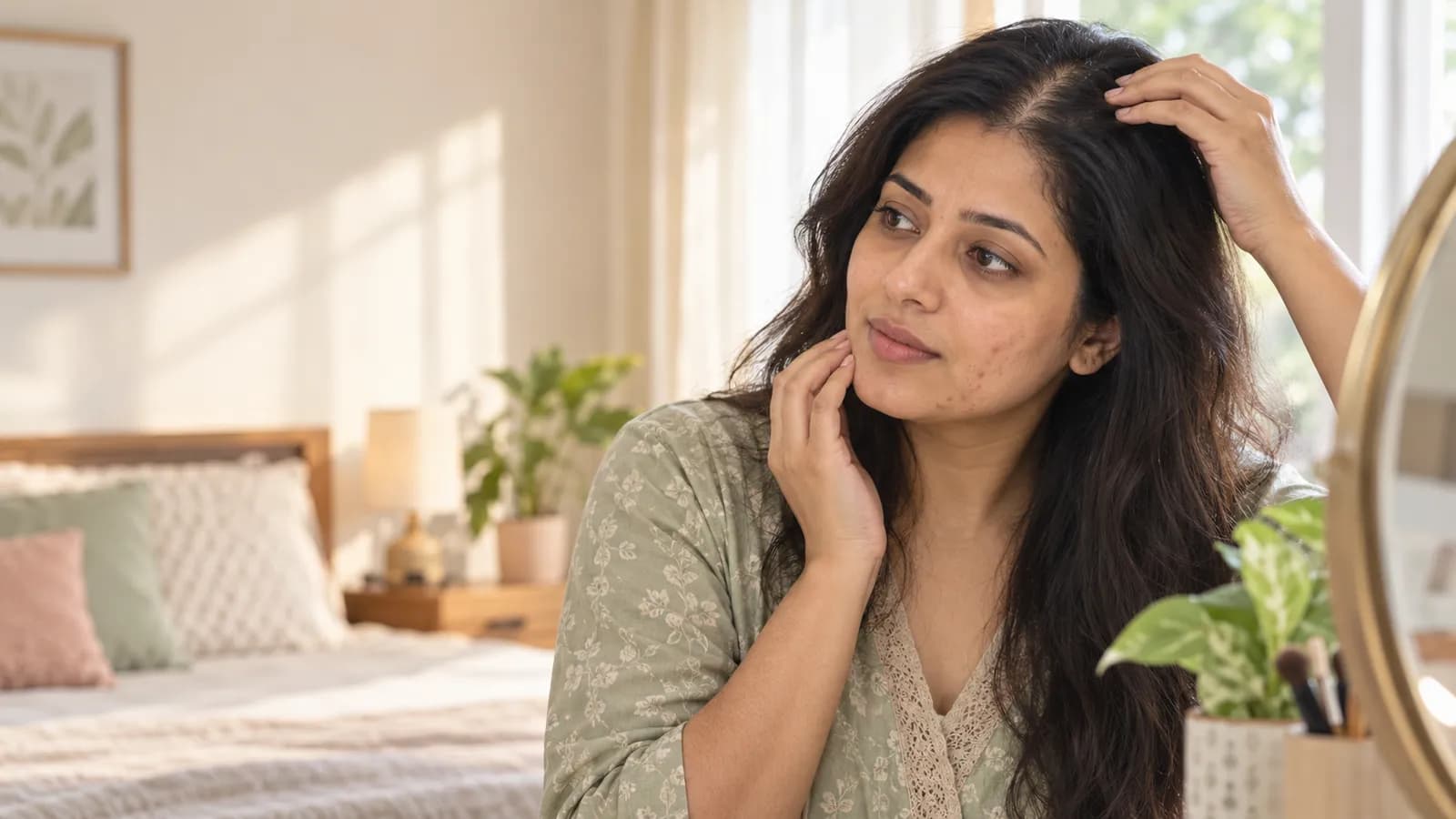
In PMOS, androgen excess and insulin resistance can contribute to several visible changes. Increased androgen activity may stimulate the oil glands, resulting in persistent or adult-onset acne, while also causing thicker hair growth on the face, chest or abdomen.
At the same time, androgens can affect scalp hair follicles differently, leading to thinning of scalp hair, particularly over the crown or frontal scalp.
Another clue can be the skin itself. Acanthosis nigricans dark, thickened, velvety skin, especially around the neck, underarms or groin may be associated with insulin resistance. Skin tags may also be seen.
But remember: not every woman with acne or hair loss has PMOS, and these symptoms can have several other causes. They deserve proper evaluation rather than self-diagnosis.
What does Ayurveda add?
Ayurveda looks beyond the visible symptom and considers the person’s Prakriti, Agni, Ahara, Vihara and Dosha–Dushya involvement. Skin and hair health are viewed in relation to internal metabolism and overall well-being.
Interestingly, concerns about unwanted hair are not new. Nearly two millennia ago, Sushruta described methods of hair removal. In Sushruta Samhita, he mentions mechanical removal using Kṣura (razor), Kartari (scissors) and Sandaṃśa (forceps), along with several topical Loma-śātana preparations.
This reminds us that hair removal has long been considered a part of clinical and personal care. However, classical formulations should not be used as home remedies, as some contain potent or potentially toxic substances and require appropriate expertise.
Today, hair-removal methods should similarly be chosen carefully and, when therapeutic preparations are considered, prescribed according to your skin type, the site of application and individual needs.
What can you do?
Nourish your body: Choose a balanced diet and reduce excessive refined and highly processed foods.
Keep moving: Regular walking and strength training can support metabolic health.
Prioritise sleep: Maintain a consistent sleep-wake rhythm.
Manage stress: Yoga, breathing exercises and relaxation practices can support overall well-being.
Don’t ignore persistent symptoms: Significant hair loss, excessive facial hair or persistent acne particularly when associated with menstrual irregularity deserve proper medical evaluation.
Your skin and hair are not merely cosmetic concerns. Sometimes, they are windows into your metabolic and hormonal health.
Listen to what your body is telling you and look beyond the mirror.