
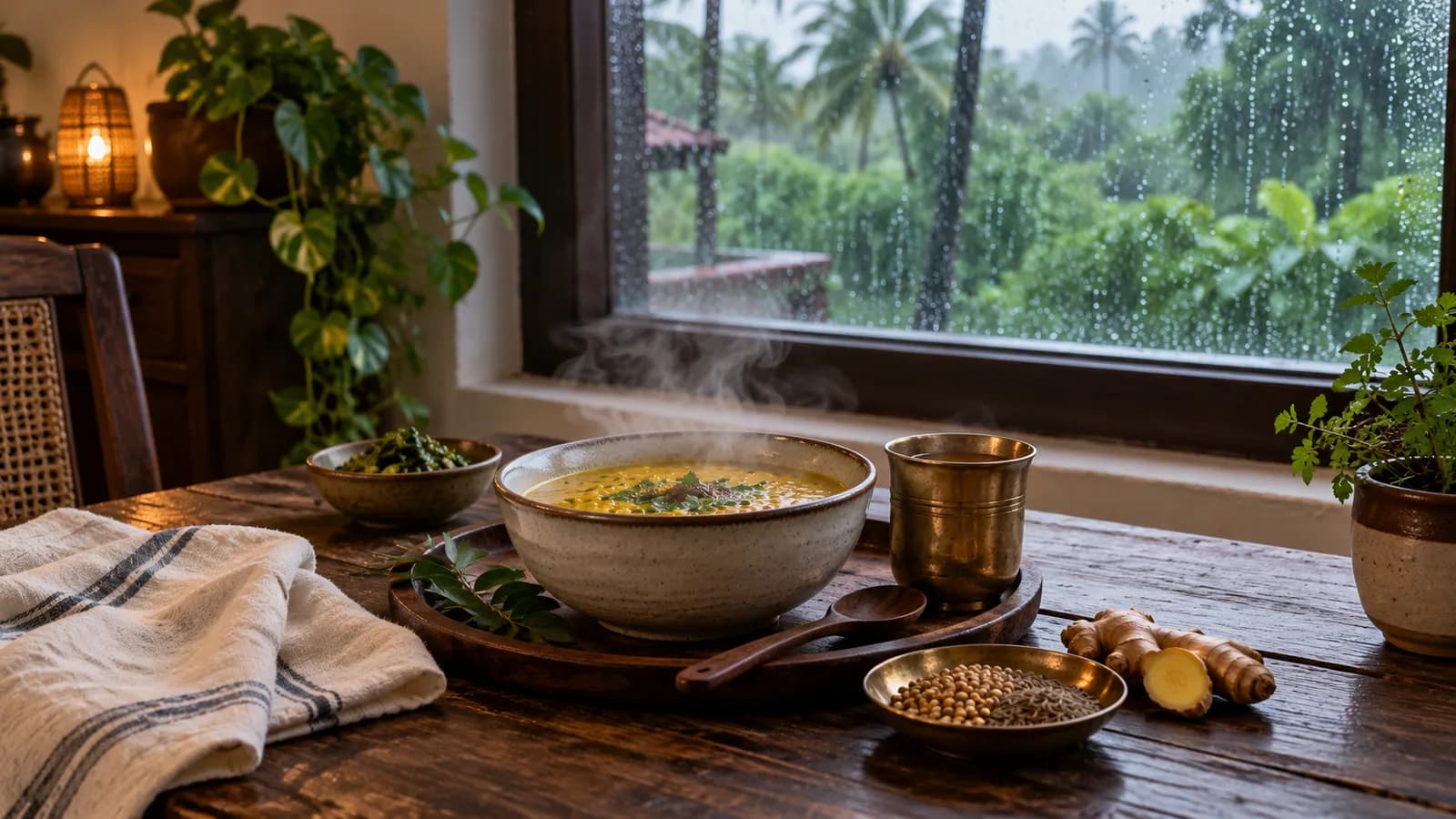
The first showers of rain bring the smell of wet earth, lush greenery, and cool breezes making the monsoon one of the most loved seasons of the year. Yet, paradoxically, it is also a season when digestive problems, infections, joint pains, and seasonal illnesses become increasingly common.
Ayurveda recognised this pattern and recommended Varsha Ritucharya- the seasonal regimen for the rainy season. Interestingly, many of these ancient observations continue to find relevance in modern science.
According to the Ashtanga Hridaya, the rainy season follows Grishma Ritu (summer), a period during which the intense heat gradually depletes the body’s strength.
" आदानग्लानवपुषामग्निः सन्नोऽपि सीदति "
After the exhausting summer, the body’s strength is reduced, and the digestive fire (Agni), already weakened, declines even further during the rainy season.
Ayurveda attributes this to the unique environmental characteristics of Varsha Ritu:
- Dense rain-laden clouds that reduce sunlight
- Cold, moisture-laden winds
- High humidity due to vapours rising from the earth
- Natural changes in water quality
- A damp, cool atmosphere that affects the body’s internal balance
These factors collectively weaken digestion and disturb the equilibrium of the Doshas.
Modern environmental science paints a remarkably similar picture. During the monsoon, reduced sunlight, high humidity, fluctuating temperatures, and increased microbial growth create conditions that challenge multiple body systems, particularly digestion and immunity.
What Happens to Our Body During Monsoon?
Ayurveda’s Perspective
Ayurveda explains that the digestive fire (Agni) becomes sluggish during Varsha Ritu. Since proper digestion is considered the foundation of health, weakened Agni can lead to incomplete digestion, accumulation of Ama (metabolic waste), and disturbance of the Doshas.
Common manifestations include:
- Reduced appetite
- Indigestion
- Bloating
- Acidity
- Constipation or loose stools
- Fatigue
- Frequent illnesses
The classical texts also mention that during this season the Doshas begin to disturb one another, making the body more vulnerable to disease.
Modern Scientific Perspective
Modern medicine does not describe Agni or Doshas, but it recognises several seasonal influences that produce similar outcomes.
During the rainy season:
- Food and water contamination become more common.
- Humidity promotes bacterial and fungal growth.
- Gastrointestinal infections increase.
- Physical activity often decreases.
- People tend to consume heavier, fried comfort foods.
Together, these factors contribute to digestive discomfort, reduced appetite, bloating, and an increased incidence of food- and water-borne illnesses such as gastroenteritis, typhoid, hepatitis A, and diarrhoeal diseases.
While Ayurveda and modern medicine explain these changes differently, both agree that digestion deserves special attention during the monsoon.
Protecting Agni: The Central Principle
Among all the recommendations of Varsha Ritucharya, one principle stands above the rest:
Protect and strengthen Agni.
Ayurveda considers Agni to be the cornerstone of health. When digestion functions efficiently, nourishment is properly assimilated, wastes are eliminated effectively, and the body’s natural resistance is maintained.
For this reason, almost every dietary recommendation during Varsha Ritu is aimed at supporting digestion rather than burdening it.
What Should You Eat During Monsoon?
Ayurveda recommends foods that are light, warm, freshly prepared, and easy to digest.
Prefer:
- Freshly cooked meals
- Warm soups
- Old rice, wheat, and barley
- Green gram (Moong dal)
- Vegetable soups
- Thin rice gruels when digestion is poor
- Moderate amounts of ghee, if suitable
Freshly stored grains are considered heavier, whereas aged grains are believed to digest more easily.
Modern nutrition also supports freshly prepared meals during the rainy season, as humidity accelerates microbial growth in stored foods.
Use Digestive Spices
The classical texts recommend spices that kindle Agni.
These include:
- Dry ginger
- Black pepper
- Long pepper (Pippali)
- Chitraka
- Chavya
- Cumin
- Coriander
- Rock salt
Many of these spices have been shown to possess digestive, carminative, antimicrobial, or antioxidant properties and are traditionally used to relieve bloating and improve appetite.
Buttermilk: A Classical Monsoon Drink
Ayurveda recommends thin buttermilk seasoned with rock salt and digestive spices such as Panchakola.
It is considered:
- Light
- Digestive
- Helpful in reducing Kapha
- Beneficial for sluggish digestion
Today, buttermilk can also contribute to hydration and provide beneficial nutrients. However, it should be fresh and consumed only if it suits the individual.
What Foods Should Be Avoided?
During Varsha Ritu, digestion is naturally less efficient. Heavy foods therefore remain in the stomach longer and may worsen digestive discomfort.
Avoid or minimise:
- Deep-fried foods
- Excessively oily meals
- Refrigerated foods
- Stale leftovers
- Cold beverages
- Ice creams
- Excess sweets
- Raw salads from uncertain sources
- Street food during heavy rains
Ayurveda also advises against eating large quantities when appetite is poor.
Modern gastroenterology similarly recommends lighter meals during episodes of digestive upset and emphasises food safety during the rainy season.
Water Matters More Than Ever
One of the most striking recommendations in the classical texts is the emphasis on drinking properly processed water.
Ayurveda advises drinking boiled water obtained from clean sources.
This advice becomes particularly important because the texts recognise that rainwater and river water undergo natural changes during the season and are more prone to contamination.
Modern public health strongly supports this recommendation.
Heavy rainfall increases the likelihood of contamination of water supplies with bacteria, viruses, and parasites. Boiling water destroys most disease-causing microorganisms and remains one of the simplest ways to prevent water-borne illnesses.
If boiling is not practical, properly filtered and safe drinking water should be used.
Stay Dry, Stay Warm
The classical texts repeatedly advise protecting the body from dampness.
Recommendations include:
- Wear completely dry clothes.
- Avoid remaining in wet garments after getting drenched.
- Keep living spaces dry and well ventilated.
- Avoid excessive exposure to cold winds and damp environments.
Historically, clothes were even fumigated with aromatic herbs before use to remove moisture and improve freshness.
Modern science explains why these recommendations remain relevant.
Persistent dampness:
- Encourages fungal skin infections
- Promotes mould growth
- Increases discomfort
- Reduces the body’s ability to maintain thermal comfort
Keeping the body warm and dry is therefore both hygienic and physiologically beneficial.
Lifestyle During Monsoon
Ayurveda advises moderation in physical activity.
Avoid:
- Excessive walking
- Strenuous exercise
- Overexertion
- Daytime sleeping
Instead, choose gentle movement such as:
- Walking
- Yoga
- Stretching
- Light household activity
High humidity reduces the body’s ability to cool itself efficiently during exercise because sweat evaporates less readily. Consequently, physical exertion often feels more tiring than expected, making moderate activity a sensible choice.
Adequate nighttime sleep and regular meal timings further support digestion and overall well-being.
Seasonal Hygiene Is Preventive Medicine
Varsha Ritucharya extends beyond food.
Simple habits can significantly reduce illness:
- Wash hands before meals.
- Keep nails trimmed.
- Store food properly.
- Eat freshly prepared meals.
- Dry footwear completely.
- Avoid walking barefoot in contaminated water.
- Ensure good household ventilation.
These practices reduce exposure to infectious organisms that become more prevalent during the rainy season.
A Shared Message from Ayurveda and Modern Science
Although Ayurveda and modern medicine describe the body’s response to the rainy season using different concepts, their practical advice overlaps remarkably.
Ayurveda explains the season through weakened Agni and disturbed Doshas. Modern science explains it through environmental factors, microbial contamination, humidity, and changing patterns of digestion and immunity.
Both systems encourage us to:
- Eat freshly prepared food.
- Choose light, easily digestible meals.
- Drink safe water.
- Maintain hygiene.
- Avoid excessive exertion.
- Keep the body dry and comfortable.
- Adapt our lifestyle to the season.
The rainy season reminds us that health is not static- it changes with nature. One of Ayurveda’s greatest strengths lies in recognising these seasonal rhythms and encouraging us to adapt rather than resist them.
By making small, thoughtful adjustments in our food, water, clothing, activity, and daily routine, we can protect our digestive strength, reduce the risk of seasonal illnesses, and enjoy the beauty of the monsoon in good health.
As Acharya Vagbhata emphasises, the priority during Varsha Ritu is to preserve Agni- because when digestion remains strong, the body is better equipped to nourish itself, defend against disease, and maintain balance throughout the season.
The rains nourish the earth. Let them nourish your body too- through mindful eating, safe water, good hygiene, and living in harmony with the season.