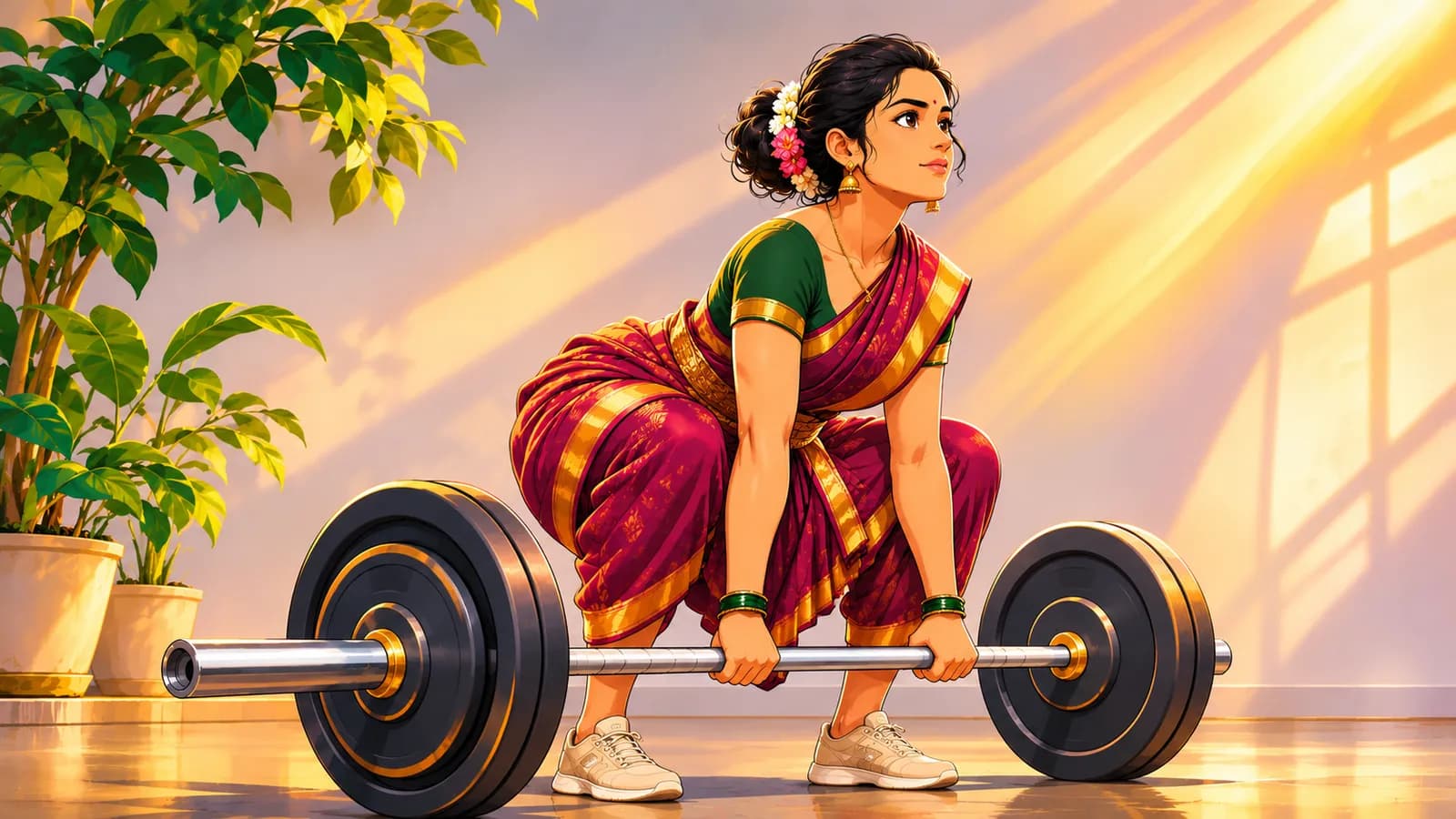
Weight training is one of the best ways to improve muscle strength, bone health, metabolism and overall physical fitness. But if you have haemorrhoids (piles), you may have noticed something uncomfortable: increased anal discomfort, a feeling of heaviness, swelling or even bleeding after an intense workout.
Does this mean you should stop lifting weights?
No! The problem is not weight training itself. The concern is excessive straining, breath-holding, poor lifting mechanics and repeatedly exposing already symptomatic haemorrhoids to high pressure.
With the right breathing pattern, posture, exercise selection and bowel habits, many people with haemorrhoids can continue strength training safely.
What happens inside your body when you lift weights?
Every time you lift a weight, your abdominal muscles and diaphragm work together to stabilise your trunk. This creates a phenomenon called intra-abdominal pressure (IAP).
A certain amount of intra-abdominal pressure is normal and necessary. It helps stabilize your spine and allows you to lift weights efficiently. However, when you lift very heavy weights, particularly while holding your breath and straining, this pressure can rise considerably.
This is especially relevant during:
- Heavy squats.
- Deadlifts.
- Leg presses.
- Heavy overhead presses.
- Exercises performed close to maximum lifting capacity.
A systematic review of resistance-training studies found that heavy squats generated particularly high intra-abdominal pressure, followed by exercises such as deadlifts and leg presses.
Why does this matter in piles?
Haemorrhoids are enlarged and displaced vascular cushions in the anal canal. Increased abdominal pressure and straining can interfere with venous drainage and potentially aggravate existing haemorrhoidal symptoms.
If you already have symptomatic haemorrhoids, repeated excessive straining may worsen:
- Swelling and congestion.
- Discomfort around the anal opening.
- Prolapse of internal haemorrhoids.
- Bleeding during or after bowel movements or otherwise.
Note that weight training has not been established as a direct cause of haemorrhoids in every individual. The concern is excessive pressure and symptom aggravation, particularly in people who already have the condition.
The biggest mistake: Holding your breath while lifting weights
Valsalva Manoeuvre
Have you ever noticed that you automatically hold your breath when lifting something heavy? This is called the Valsalva manoeuvre. It involves taking a breath, closing the glottis and forcefully contracting the abdominal muscles while holding the breath. It can provide additional trunk stability during very heavy lifting. However, it also causes substantial changes in intra-abdominal and intrathoracic pressure.
For someone experiencing symptomatic haemorrhoids, repeatedly using this technique during heavy lifting may not be ideal.
What should you do instead?
Use controlled breathing coordinated with the movement.
During the lifting/ exerting phase: Exhale gently
During the lowering/ relieving phase: Inhale slowly and in a controlled manner
For example:
- Squats: Inhale while lowering; exhale while standing up.
- Bicep curls: Exhale while curling; inhale while lowering.
- Chest press: Exhale while pushing; inhale while returning.
- Shoulder press: Exhale while pressing overhead; inhale while lowering.
Do not forcefully blow out all your air or push your abdomen down. The aim is controlled breathing, not another form of straining.
Correct lifting posture: Protect your core, Dont strain your pelvic floor
Breathing is only one part of the solution. Your posture and lifting technique matter too.
Three important principles:
A. Maintain a neutral spine
- Avoid excessive rounding of your lower back.
- Avoid exaggerated arching.
- Maintain a comfortable, stable spinal position.
- Keep the weight close to your body whenever possible.
B. Avoid excessive abdominal pushing
Your core needs to be engaged during weight training, but engaging your core does not mean pushing your abdomen forcefully downwards. Learn to brace gently while continuing to breathe.
C. Avoid pelvic floor bearing down
Your pelvic floor should coordinate with your breathing and abdominal muscles. Avoid pushing down towards the anus or feeling as though you are bearing down to complete a repetition.
If you notice pressure or heaviness in the perineal region, reduce the load and reassess your technique.
Which exercises should you modify?
You may need to modify the load, intensity, range of movement and technique.
Heavy barbell squats
Heavy squats can generate substantial intra-abdominal pressure. Start with bodyweight squats, light goblet squats or supported squats. Progress gradually.
Heavy deadlifts
They require considerable trunk stabilisation and can involve breath-holding. Begin with light Romanian deadlifts or supported hip-hinge movements, maintaining controlled breathing.
Heavy leg presses
Pushing against heavy resistance, particularly with breath-holding, may increase abdominal pressure. Reduce the resistance, avoid excessive knee-to-chest compression and never lock your breath while pushing.
Chest press
Use light-to-moderate weights, maintain a stable position and exhale while pressing.
Seated rows
Avoid jerking, excessive trunk movement and breath-holding.
The aim is not to label an exercise as universally safe or unsafe. The same exercise can be well tolerated with a light load and controlled breathing but problematic when performed with maximal effort.
Pelvic floor awareness: An often-overlooked aspect of weight training
Your pelvic floor is a group of muscles that supports the pelvic organs and helps coordinate urinary and bowel functions.
It works together with:
- The diaphragm.
- Deep abdominal muscles.
- Spinal stabilising muscles.
During weight training, these structures work as a coordinated pressure-management system. If you repeatedly hold your breath, brace excessively or bear down, you may increase the load placed on your pelvic floor.
What can you do?
Practice diaphragmatic breathing.
- Lie on your back with your knees comfortably bent.
- Place one hand on your chest and the other on your abdomen.
- Inhale gently through your nose, allowing your lower ribs and abdomen to expand.
- Exhale slowly, allowing the abdomen and pelvic floor to relax naturally.
- Repeat for 5–10 comfortable breaths.
This helps develop awareness of breathing and pelvic floor coordination.
Should you practise Kegel exercises?
Not automatically. Kegels involve contracting the pelvic floor muscles. They are useful in selected conditions, particularly when pelvic floor weakness is present.
However, some people have an overactive or poorly relaxing pelvic floor.
If you have anal pain, pelvic heaviness, difficulty relaxing during bowel movements or persistent straining, a pelvic floor physiotherapist can assess whether strengthening, relaxation or coordination exercises are appropriate.
The objective is a well-coordinated pelvic floor, not a constantly contracted one.
Ayurvedic perspective: Keeping Agni and Apana Vata in balance
Modern medicine helps us understand the pressure changes associated with lifting weights. Ayurveda offers another important perspective: maintaining healthy digestion and regular bowel evacuation. Charaka describes the importance of maintaining Agni (digestive capacity) and facilitating Vata Anulomana (the normal downward movement of Vata).
यद्वायोरानुलोम्याय यदग्निबलवृद्धये। अन्नपानौषधद्रव्यं तत् सेव्यं नित्यमर्शसैः॥
Meaning: Foods, drinks and medicines that support the normal movement of Vata and maintain digestive strength should be used in individuals suffering from Arshas(Hemorrhoids).
How can we apply these principles to modern fitness routines?
A. Prioritise bowel regularity
One of the most important aspects of haemorrhoid management is avoiding constipation and excessive straining during defecation.
- Regular meal timings.
- Appropriate food quantities.
- Freshly prepared meals.
- Adequate dietary fibre.
- Foods that support comfortable bowel evacuation.
- Avoiding habitual suppression of natural urges.
B. Choose appropriate foods
Consider including:
- Warm vegetable soups.
- Green gram dal preparations & other whole grain preparations
- Well-cooked vegetables and leafy greens.
- Barley and whole grains, according to tolerance.
- Ripe fruits such as papaya and guava.
- Adequate fluids throughout the day.
The aim is to maintain soft, formed stools rather than excessively hard stools or diarrhoea.
C. Avoid excessive dietary restrictions
People who exercise regularly sometimes follow high-protein diets with very little fibre.
A diet consisting predominantly of protein supplements, meat or eggs, with inadequate vegetables, fruits and whole grains, can make bowel regularity difficult.
Your nutrition plan should include adequate protein for muscle recovery alongside sufficient fibre and fluids.
There is no need to adopt an excessively restrictive diet simply because you have haemorrhoids.
D. Maintain Agni without aggravating symptoms
Use digestive spices such as cumin, coriander and small quantities of ginger according to individual tolerance.
If you experience anal burning or irritation, avoid excessive use of very spicy foods if they aggravate your symptoms.
Ayurvedic formulations and medicines for Arsha should be selected individually by a qualified Ayurvedic physician. Do not self-prescribe herbal laxatives, strong purgatives or medicated preparations.
E. Vega Udeerana & Dharana
Holding an urge to stool or straining are strictly prohibited. This will worsen anorectal conditions. We must respect our body’s cues.
Yoga and breathing practices to complement your gym routine
Yoga can help improve flexibility, body awareness, breathing coordination and relaxation. The emphasis should be on gentle movements without excessive abdominal pressure or bearing down.
Pavana Muktasana - Wind releasing pose
Marjariasana - Bitilasana Cat-cow movements
Balasana - Child pose
Nadi Shodhana - Gentle alternate-nostril breathing without forcing or holding your breath.
Avoid forceful Kapalabhati, Bhastrika and prolonged breath-retention practices during symptomatic episodes, particularly if they provoke abdominal pressure or bearing down.
These practices are supportive, not treatments for enlarged haemorrhoids.
Your bowel habits matter as much as your gym habits
- Never suppress the natural urge to defecate.
- Avoid straining or forcefully pushing during bowel movements.
- Avoid spending prolonged periods on the toilet scrolling through your phone.
- Aim for soft, formed stools.
- Include adequate dietary fibre.
- Maintain adequate hydration.
- Avoid excessive use of laxatives without medical advice.
- Maintain regular physical activity.
- Avoid prolonged sitting throughout the day.
- Establish a comfortable and consistent bowel routine.
The American Society of Colon and Rectal Surgeons recommends adequate fluid and fibre intake, appropriate bowel habits and avoiding excessive straining as first-line measures for symptomatic haemorrhoids.
When should you avoid weight training and consult a doctor?
There are situations when modifying your gym technique is not enough.
Seek medical assessment if you experience:
- Repeated bleeding during or after bowel movements.
- Increasing anal pain.
- A painful lump around the anal opening.
- Haemorrhoidal prolapse that does not reduce.
- Persistent swelling or discomfort.
- Symptoms that do not improve with dietary and lifestyle changes.
Rectal bleeding should never automatically be attributed to piles. Anal fissures, inflammatory bowel disease, polyps and colorectal malignancies can also cause bleeding.
Heavy bleeding, dizziness, fainting, severe abdominal pain or black stools warrant urgent medical attention.
Depending on the grade and severity of haemorrhoids, treatment may include medical management, rubber band ligation, sclerotherapy or surgery. Exercise modifications alone cannot treat every stage of haemorrhoidal disease.
The final takeaway
You don’t have to give up your fitness goals because you have haemorrhoids. You need to understand how your body responds to pressure and learn to exercise without excessive straining. With appropriate medical care, bowel-health management and modified training techniques, you can work towards better strength and fitness without unnecessarily aggravating haemorrhoids.