Conservative Ayurveda Therapies
Swedana - Therapeutic Ayurveda Sudation Therapy
A physician-directed Ayurveda heat therapy using steam, medicated liquids or herbal boluses to relieve stiffness, improve circulation, reduce pain and prepare the body for deeper healing.
Swedana is one of the principal Purva Karma (preparatory procedures) of Panchakarma and an important standalone therapy in Ayurveda. The term Swedana literally means to induce therapeutic sweating through the application of heat.
Swedana continuum
A visual guide to Snigdha and Ruksha forms of Swedana
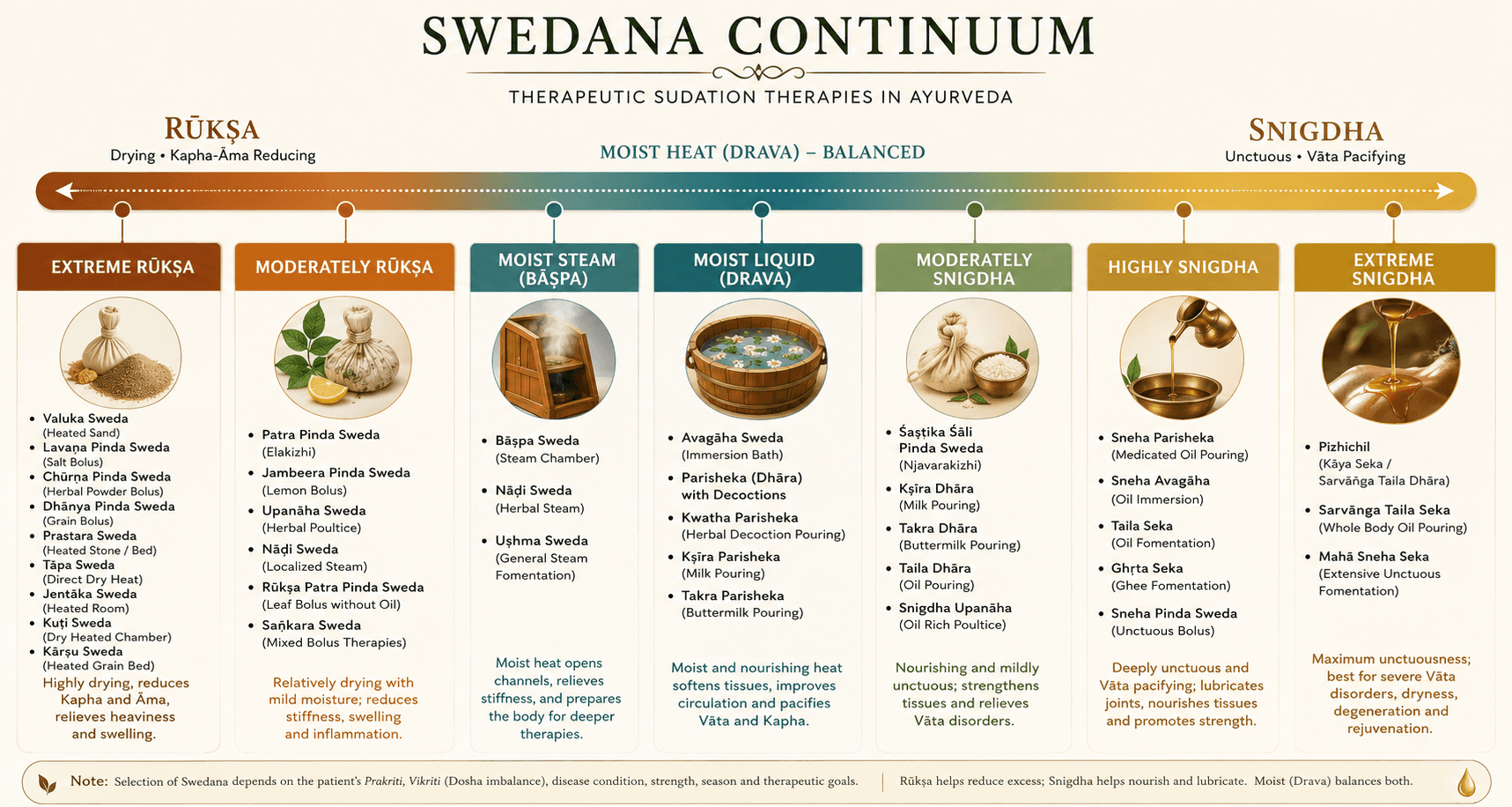
Swedana Continuum - Grading different swedas from Snigdha to Ruksha
Caution: Swedana Is a Medical Therapy, Not Simply Steam Exposure
Swedana is not equivalent to a sauna or steam bath. The intensity, duration, method of heating and choice of herbs are carefully selected after Ayurveda evaluation. Inappropriate application may aggravate certain conditions or cause dehydration and should therefore be performed only under qualified medical supervision.
Treatment overview
How Ayurveda Approaches This Treatment
Using carefully selected forms of moist or dry heat, Swedana helps relieve stiffness, heaviness and discomfort while facilitating the movement of aggravated Doshas from the peripheral tissues towards the gastrointestinal tract, where they can subsequently be eliminated through Panchakarma therapies when indicated.
Swedana is frequently combined with Abhyanga (therapeutic medicated oil massage) to enhance therapeutic benefits. However, it may also be prescribed independently depending on the patient’s condition.
The type of Swedana is individualized according to the patient’s Prakriti (constitution), Dosha imbalance, disease condition, strength and therapeutic objectives.
According to Ayurveda, aggravated Vata and Kapha Doshas commonly produce stiffness, heaviness, coldness, restricted movement and pain.
Swedana aims to:
Depending on the condition, different forms of Swedana are prescribed. Some therapies provide generalized heating, while others target specific joints or body regions.
Treatment goals
- Relieve stiffness
- Reduce heaviness
- Improve local circulation
- Promote sweating
- Relax muscles
- Improve joint mobility
- Facilitate movement of Doshas during Panchakarma
- Enhance absorption of medicated oils following Abhyanga
- Reduce pain
- Promote comfort and relaxation
Conditions Indicated
Swedana may be recommended as part of a comprehensive treatment plan for
Musculoskeletal Disorders
- Osteoarthritis
- Rheumatoid arthritis (selected stages)
- Cervical spondylosis
- Lumbar spondylosis
- Frozen shoulder
- Muscle spasm
- Back pain
- Neck pain
- Joint stiffness
- Sports injuries (selected conditions)
Neurological Disorders
- Sciatica
- Hemiplegia
- Facial palsy
- Peripheral neuropathy
- Parkinsonism (supportive care)
- Vata disorders
Chronic Pain Disorders
- Myofascial pain
- Fibromyalgia (selected patients)
- Chronic muscle tightness
- Tendinitis
- Plantar fasciitis
General Health & Wellness
- Generalized body stiffness
- Sedentary lifestyle-related muscle tightness
- Seasonal Vata aggravation
- Preventive healthcare
- Rejuvenation therapies
Panchakarma Preparation
- Prior to Vamana
- Prior to Virechana
- Prior to Vasti
- Prior to Nasya
Types of Swedana
The appropriate form of Swedana is selected after physician evaluation
Generalized Swedana
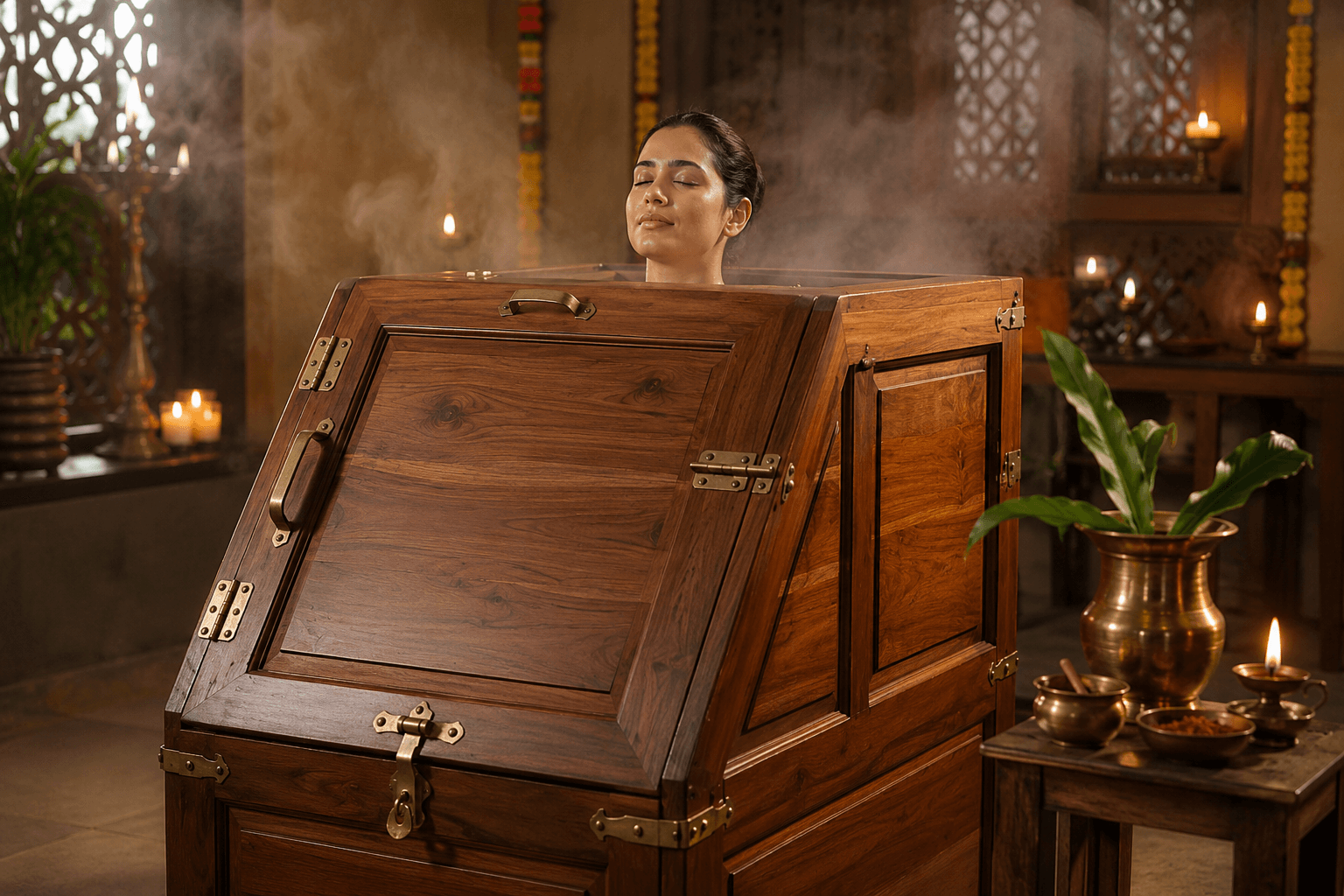
- Bashpa Swedana (Herbal Steam Chamber Therapy) - The body is exposed to medicated herbal steam while the head remains outside the chamber. Commonly used after Abhyanga and during Panchakarma preparation.
- Tapa Swedana (Dry Sauna Chamber Therapy) - This method is appropriate when oleation is not preferred and moisture based sudation is to be avoided.
Localized Swedana
- Nadi Swedana - Localized herbal steam directed towards a specific body part using a steam hose.
- Commonly used for: Neck pain, Shoulder pain, Knee pain, Low back pain, Muscle spasm
- Pinda Sweda (Herbal Bolus Therapies)
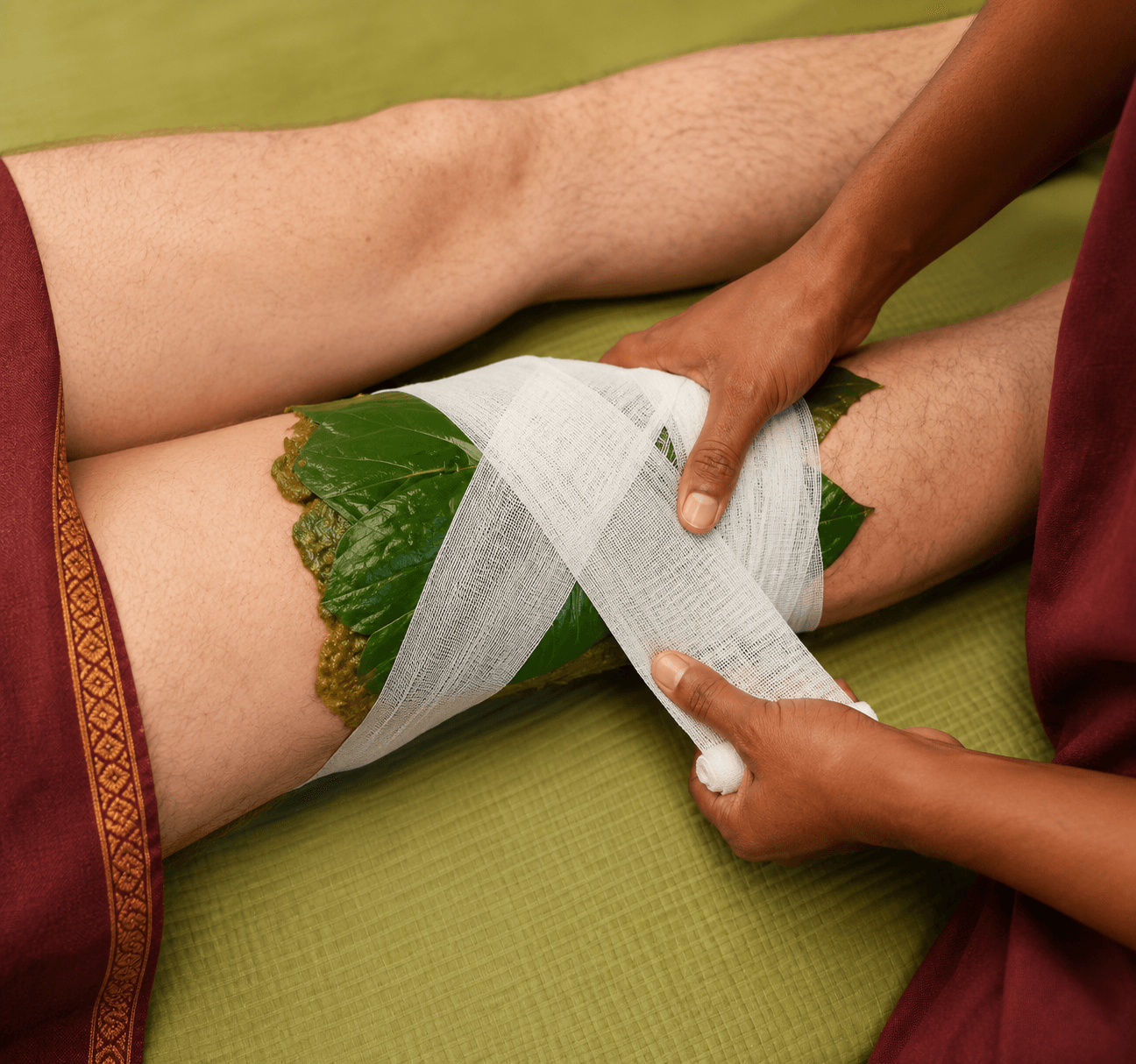
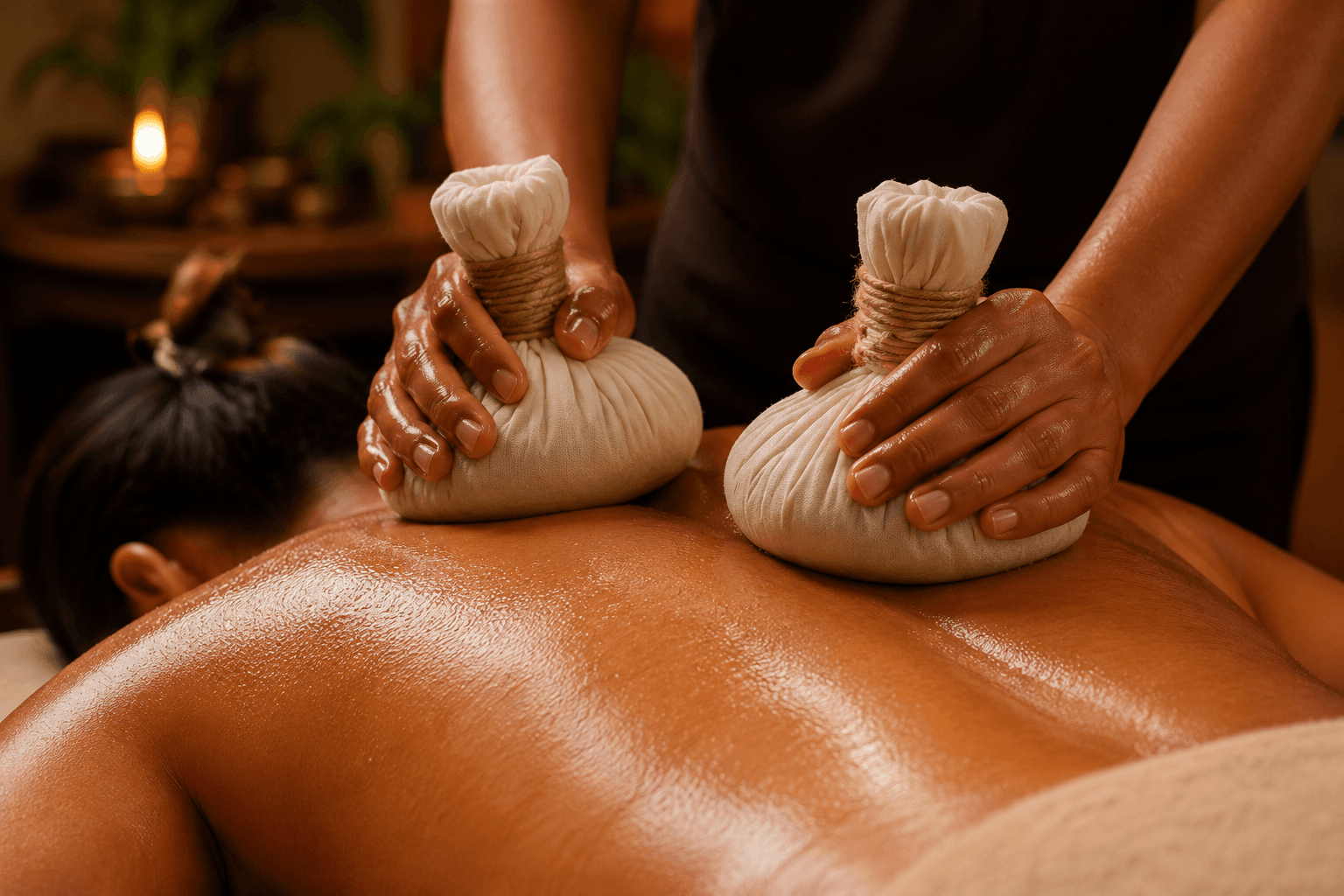
- Patra Pinda Sweda (Elakizhi) - Warm boluses prepared using medicinal leaves are applied over the body to relieve pain, stiffness and inflammation.
- Choorna Pinda Sweda (Podikizhi) - Heated herbal powder boluses used to reduce stiffness, swelling and improve mobility.
- Shashtika Shali Pinda Sweda (Njavarakizhi) - Warm boluses prepared using special medicinal rice cooked in herbal decoctions and milk. This nourishing therapy is commonly used for neurological disorders, muscle wasting and rehabilitation.
- Jambeera Pinda Sweda - Warm lemon boluses used in selected musculoskeletal disorders with pain and stiffness.
- Valuka Sweda - Dry heated sand boluses commonly used where dry heat is preferred, particularly in conditions associated with swelling and Ama.
- Drava Sweda (Liquid Heat Therapies)
- Pizhichil (Kaya Seka) - Continuous pouring of warm medicated oil over the body combined with synchronized therapeutic massage.
- Parisheka (Dhara) - Continuous pouring of warm medicated herbal liquids over the affected body part.
- Avagaha Sweda - Immersion of the affected body part or the body in warm medicated liquids for selected musculoskeletal, anorectal and urogenital conditions.
- Other Localized Heat Therapies
- Upanaha Sweda - Application of a warm medicated herbal poultice retained over the affected area for prolonged therapeutic heating.
Benefits
Patients may experience
Benefits vary according to the condition, disease severity and adherence to dietary and lifestyle recommendations.
Reduced joint stiffness
Relief from muscle spasm
Improved flexibility
Reduced pain
Better circulation
Improved mobility
Relaxation of muscles
Enhanced effectiveness of Panchakarma
Better absorption of medicated oils
Improved overall comfort
Who Can Benefit
Your Ayurveda physician will determine whether Swedana is appropriate after evaluating your overall health
- Joint stiffness
- Chronic pain
- Vata disorders
- Kapha disorders with stiffness
- Muscle tightness
- Sports-related muscle fatigue
- Arthritis
- Patients undergoing Panchakarma
- Individuals requiring rehabilitative Ayurveda care
Treatment Process
What to expect during a Swedana treatment plan
Consultation
Comprehensive Ayurveda assessment including: Prakriti, Vikriti, Dosha predominance, Agni, Medical history, Musculoskeletal evaluation, Therapeutic goals.
Preparation (Purva Karma)
Depending on the treatment plan: Abhyanga may be performed, Selection of Swedana method, Preparation of herbs, boluses or medicated liquids, Comfortable positioning.
Swedana Therapy
The selected Swedana procedure is performed using controlled heat, medicated steam, warm herbal boluses or medicated liquids. The physician and therapists continuously monitor patient comfort and therapeutic response.
Completion of Therapy
The body is gently wiped, the patient is allowed adequate rest and hydration is encouraged where appropriate.
Post-care
Patients receive: Dietary advice, Bathing instructions, Activity recommendations, Lifestyle guidance, Follow-up schedule.
Duration & Follow-up
Most Swedana sessions last 20-45 minutes, depending on the procedure performed.
The duration and number of sessions vary according to the underlying condition. Acute problems may require only a few sessions, whereas chronic musculoskeletal disorders often benefit from a structured treatment course.
Frequently asked questions
Common questions about Swedana
Is Swedana the same as a steam bath?
No. Swedana is a physician-directed therapeutic procedure using carefully selected methods of heating. It differs significantly from recreational steam baths or saunas.
Is Swedana always performed after Abhyanga?
Not always. Although commonly combined with Abhyanga, Swedana may also be prescribed independently depending on the clinical indication.
Will I sweat a lot?
The degree of sweating varies according to the type of Swedana, the treatment intensity and your individual constitution.
Is the therapy comfortable?
Yes. Most patients find Swedana deeply relaxing. The temperature is carefully regulated throughout the procedure.
How many sessions will I need?
The number of sessions depends on your diagnosis, disease severity and treatment goals.
Are there any precautions?
Swedana may not be suitable for individuals with high fever, acute dehydration, active bleeding disorders, uncontrolled hypertension, severe cardiac disease, pregnancy (certain procedures), acute inflammatory conditions producing excessive heat, severe debility or other situations identified during physician evaluation.
Related Treatments
Related Blogs
- What Is Swedana in Ayurveda?
- Why Is Swedana Performed Before Panchakarma?
- Steam Therapy vs Swedana: Understanding the Difference
- Which Type of Swedana Is Right for You?
- Patra Pinda Sweda vs Podikizhi: What’s the Difference?
- The Role of Heat Therapy in Ayurveda Pain Management
Receive Personalised Ayurveda Care
Wondering if Swedana Is the Right Treatment for You?
Every patient is unique. At AYANA, every Swedana therapy is carefully tailored after assessing your body constitution, Dosha imbalance, disease stage and overall health. Whether you require Bashpa Swedana, Nadi Swedana, Patra Pinda Sweda, Podikizhi, Njavarakizhi, Pizhichil or another specialised form of therapeutic sudation, our physicians develop individualized treatment protocols using authentic Ayurveda principles with modern standards of safety, hygiene and clinical excellence.
Book your consultation today and discover whether Swedana can be an integral part of your recovery and long-term wellbeing.